
儿儿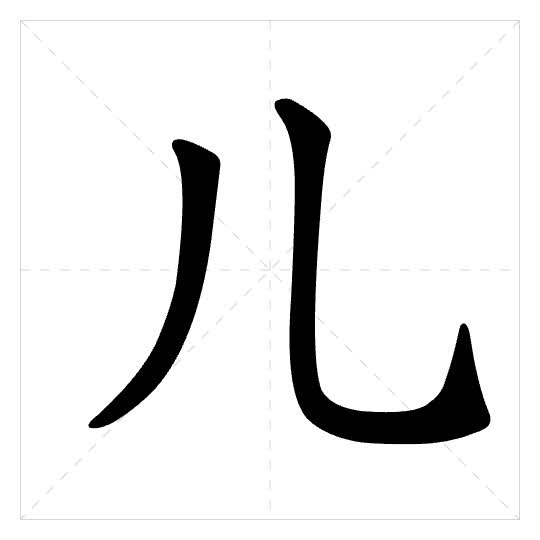
Basic Meaning
n
This is the retroflex or '儿化' suffix. It primarily modifies the pronunciation and adds a colloquial, often diminutive or familiar, nuance.
Suffix, fused with the previous character to form a retroflex sound (注音作r). 1. Indicates smallness. 2. Indicates a change in word class. 3. Makes concrete things abstract. 4. Distinguishes between different things.
后缀,同前一字连成一个卷舌音。(注音作r)。①表示小。②表示词性变化。③表示具体事物抽象化。④区别不同事物。
Words:
小孩儿小狗儿门儿根儿拐弯儿
Sentences:
- 这个小孩儿真可爱。This little kid is really cute.
- 等一下,我在那个拐弯儿的地方等你。Wait a moment, I'll wait for you at that turn.
n
child.
小孩子。
Words:
儿童婴儿幼儿儿科儿戏
Sentences:
- 公园里有很多儿童在玩耍。There are many children playing in the park.
- 婴儿需要特别的照顾。Infants need special care.
n
young person (often referring to a male).
年轻人(多指男子)。
Words:
健儿男儿英雄儿女男儿本色儿女英雄
Sentences:
- 他是一名为国争光的体育健儿。He is an athlete who brings glory to the country.
- 男儿志在四方。A man's ambition should be far-reaching.
n
son.
儿子。
Words:
Sentences:
- 他们夫妻俩有一个儿子和一个女儿。They, husband and wife, have a son and a daughter.
- 父母都希望儿孙满堂。Parents all hope for many children and grandchildren.
n
A collective term parents use for their children, or a term children use to refer to themselves in relation to their parents.
父母对儿女的统称,儿女对父母的自称。
Sentences:
- 爸爸妈妈,请保重身体,儿在外一切都好。Mom and Dad, please take care of your health. Your child is doing well away from home.
- 儿女们计划为父母举办一个生日派对。The children are planning to throw a birthday party for their parents.
Writing & Component
Radical儿
Structuresingle
Stroke Count2
Strokes丿乚