
例例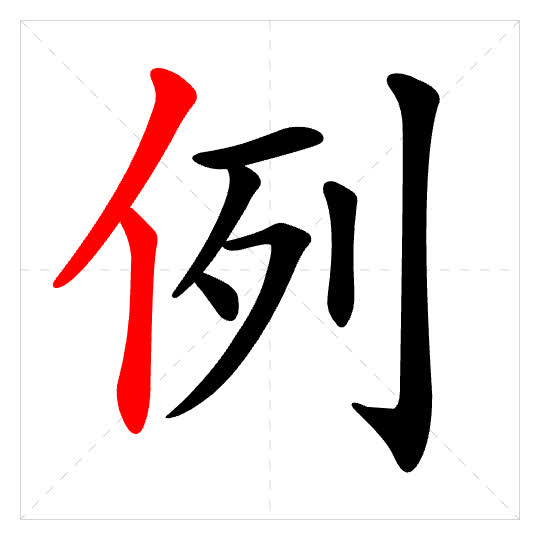
Basic Meaning
n
Often used in contexts like teaching, explanation, or demonstration to provide clarity or evidence.
example; instance; something that can serve as a basis to illustrate a situation or be used as a typical case for generalization.
可作为根据说明情况或作为典型广而推之的事物。
Words:
事例例证举例实例例句
Sentences:
- 老师用这个例句来解释语法规则。The teacher uses this example sentence to explain the grammar rule.
- 请举一个实例来说明你的观点。Please give a concrete example to illustrate your point.
n
Commonly used in legal, historical, or formal contexts to refer to established practices or events.
precedent; previous case; something that has existed before and can serve as a reference.
从前有过的可以做依据的事物。
Words:
史无前例先例惯例史例前例
Sentences:
- 这个决定没有先例,所以我们需要谨慎。This decision has no precedent, so we need to be cautious.
- 在历史上,这种事件是史无前例的。In history, this kind of event is unprecedented.
adj
Describes actions or events that follow standard procedures or routines, often in institutional or organizational settings.
regular; according to regulations; conducted by established rules.
按条例规定的,照成规进行的。
Words:
例行公事例会例假例行例课
Sentences:
- 每周的例会是公司的例行公事。The weekly regular meeting is a routine matter for the company.
- 员工每年都有例假可以休息。Employees have regular leave to rest every year.
n
Typically used in fields like medicine, law, or research to categorize specific occurrences.
case; instance in investigation or statistics that meets certain conditions.
调查或统计时指合于某种条件的事例。
Words:
病例案例特例
Sentences:
- 医生正在研究这个病例的治疗方法。The doctor is studying the treatment method for this medical case.
- 这个案例在法律上很有代表性。This case is very representative in law.
n
Refers to systematic guidelines or patterns, often in writing, law, or general conduct; note that '例外' means exception, indicating deviation from the rule.
rule; regulation; style or format.
规律;规则;体例。
Words:
凡例条例例外公例通例
Sentences:
- 遵守条例是每个人的责任,但总有例外情况。Following the regulations is everyone's responsibility, but there are always exceptions.
Writing & Component
Radical亻
Structureleft_middle_right
Stroke Count8
Strokes丿丨一丿㇇丶丨亅