
体体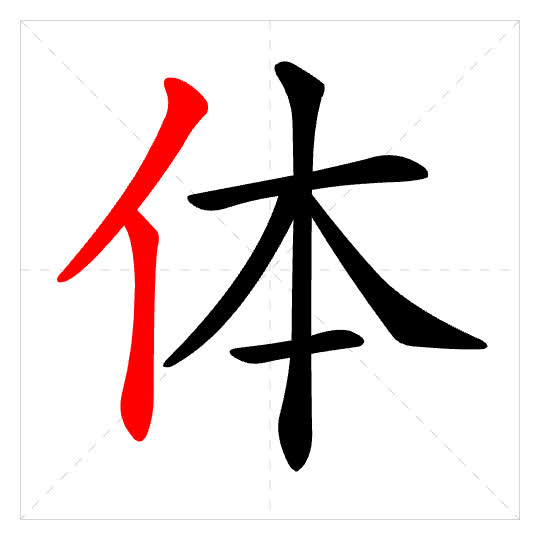
Basic Meaning
n
Often used in words related to physical health, appearance, or condition.
the human or animal body; physique. By extension, a part of the body.
人或动物的全身(身~)。引申指身体的一部分。
Words:
Sentences:
- 她每天锻炼,保持健康的身体。She exercises every day to maintain a healthy body.
- 医生检查了他的体温和体重。The doctor checked his body temperature and weight.
n
Primarily used in scientific or descriptive terms for states of matter.
the form or state in which matter exists.
物质存在的形状或形态。
Words:
流体固体液体气体晶体
Sentences:
- 水有三种形态:固体、液体和气体。Water exists in three states: solid, liquid, and gas.
n
Used for discussing art forms, writing styles, or literature types.
the form/style of writing characters; the genre or form of a literary work.
文字的书写形式;作品的体裁。
Words:
体裁字体文体草体旧体诗
Sentences:
- 写书法时,我更喜欢用楷体。When practicing calligraphy, I prefer using the regular script (Kaishu) style.
n
Often describes formal structures or accepted standards, as in the fixed format of a document.
form; pattern; specification.
形式,规格。
Words:
体例字体得体
Sentences:
- 这份报告的体例需要统一。The format and style of this report need to be standardized.
- 他说话很得体,大家都喜欢他。He speaks very appropriately, everyone likes him.
n
Primarily used in formal or political contexts to refer to organizational or state systems.
system; structure; polity.
体制。
Words:
体制政体国体体制内体统
Sentences:
- 每个国家的政体可能不同。The political system of each country may be different.
v
Often used in words expressing empathy, consideration, or direct experience.
to experience personally; to understand by putting oneself in another's position.
亲身实行和经验;设身处地地着想。
Words:
体谅体贴体会体察身体力行
Sentences:
- 你要多体谅父母的辛苦。You should be more considerate of your parents' hardships.
- 只有亲自去体会,才能真正明白。Only by personally experiencing it can you truly understand.
n
A more abstract or general sense of 'body', often referring to an entity, volume, or group.
the thing itself or the entirety of something.
事物本身或全部。
Words:
Sentences:
- 这个物体的体积很大。This object has a very large volume.
- 我们班是一个温暖的集体。Our class is a warm collective.
- 要关注集体的利益,也要尊重个体的选择。We must consider the interests of the collective, and also respect the choices of the individual.
Writing & Component
Radical亻
Structureleft_right
Stroke Count7
Strokes丿丨一丨丿㇏一