
伤伤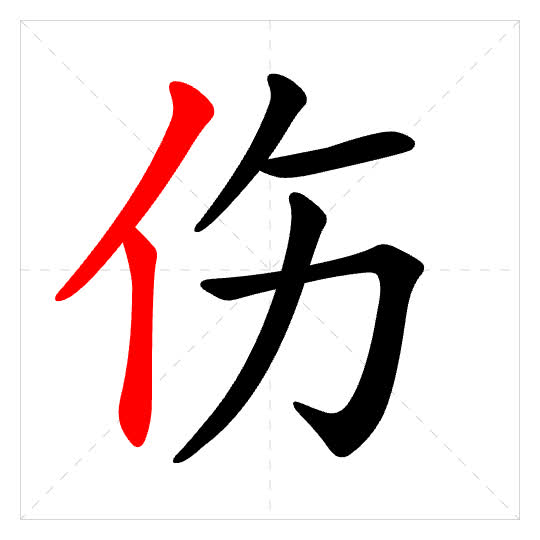
Basic Meaning
n
Refers to physical damage to a person or object. It is often used as a result, such as 'having a wound'.
injury; wound
人体或其他物体受到的损害。
Words:
伤口受伤内伤轻伤虫伤
Sentences:
- 他的手臂上有一道很深的伤口。There is a very deep wound on his arm.
v
The most common and basic meaning, indicating the action of causing physical harm or damage. The verb can be used both transitively and intransitively.
to injure; to hurt; to cause injury
损害;伤害。
Words:
伤员伤亡轻伤重伤伤创
Sentences:
- 小心,别让剪刀伤到手。Be careful, don't let the scissors injure your hand.
- 这场车祸导致一人死亡,三人受伤。This car accident resulted in one death and three injuries.
v
Indicates becoming ill or suffering due to a specific cause. Often used with factors like cold, heat, grief, or overexertion (e.g., 伤心, 伤风). For the idiom 谷贱伤农, it metaphorically means 'low grain prices harm farmers'.
to be harmed (or fall ill) from; to become sick from
因某种致病因素而得病。
Words:
伤人伤心伤风败俗伤天害理谷贱伤农伤其十指,不如断其一指
Sentences:
- 他在雨里游了太久,伤风了。He swam in the rain for too long and caught a cold.
- 听到这个消息让她很伤心。Hearing this news made her very sad. (Literal: 'hurt the heart').
v
Specifically refers to emotional hurt or sadness. It often appears in disyllabic words like 伤心, 悲伤. When used as a verb, it often means 'to make (someone) sad'.
to sadden; to be grieved; to feel sorrow
伤感、悲哀、悲伤。
Words:
哀伤悲伤忧伤感伤伤感
Sentences:
- 那部电影悲伤的结局让观众很感伤。The sad ending of that movie made the audience feel very sorrowful.
- 离别总是令人哀伤。Farewells are always sorrowful.
v
A more formal or literary usage indicating obstruction or a negative impact on something. Common in set phrases like 无伤大雅、有伤风化.
to hinder; to be detrimental to; to affect negatively
妨害,妨碍。
Words:
无伤大雅有伤风化伤程伤效伤通
Synonyms:
痥𣦦瘌傾㓹
Sentences:
- 这个小错误无伤大雅,不必太担心This small mistake is not detrimental to the whole; you don't need to worry too much.
- 在公共场合大声喧哗有伤风化。Making loud noises in public places damages social morals and decency.
Writing & Component
Radical亻
Structureleft_right
Stroke Count6
Strokes丿丨丿一𠃌丿