
他他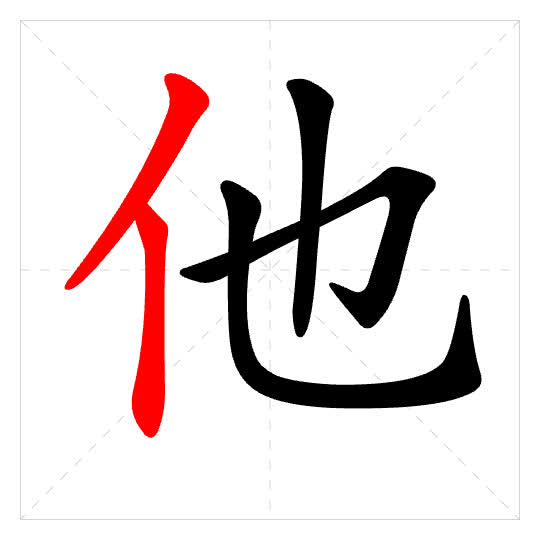
Basic Meaning
pron
Generally refers to males, but can be used generically without specifying gender.
he; him; (sometimes gender-neutral) they; them
称你、我以外的第三人,一般指男性,有时泛指,不分性别。
Sentences:
- 他是我的老师He is my teacher.
- 我昨天看见他了I saw him yesterday.
- 每个人都有自己的想法,他也不例外Everyone has their own thoughts, and he is no exception.
pron
This usage is idiomatic and often seen in fixed expressions.
used between a verb and a quantifier to indicate an indefinite or vague reference
用在动词合数量词之间,表示虚指。
Sentences:
- 吃他几个苹果没关系It's okay to eat a few apples (indefinite reference).
pron
Formal or literary, often used in classical or written contexts.
that; other; elsewhere (literary usage)
〈书〉指示代词。指别一方面或其他地方。
Words:
排他尚能他用早已他去
Sentences:
- 这个问题很复杂,需要从排他角度考虑This problem is very complex and needs to be considered from an exclusive (other) perspective.
- 资源有限,不能尚能他用Resources are limited and cannot be used for other purposes.
pron
Formal or literary, commonly found in compounds or set phrases.
other; another (literary usage)
〈书〉示代词。另外的;其他的。
Words:
他日他人
Sentences:
- 他日我们再见面吧Let's meet again another day.
pron
Used in contexts emphasizing reciprocity or generality among people.
anyone; many people (used in parallel with 'you' to indicate mutual or collective action)
人称代词。泛指任何人或许多人(用在同“你”并列的语句里,表示彼此共同或相互怎么样)。
Sentences:
- 你和他都应该参加这个活动You and everyone should participate in this activity.
- 大家互相帮助,你帮我,我帮他Everyone helps each other; you help me, and I help others.
Writing & Component
Radical亻
Structureleft_right
Stroke Count5
Strokes丿丨𠃌丨乚