
也也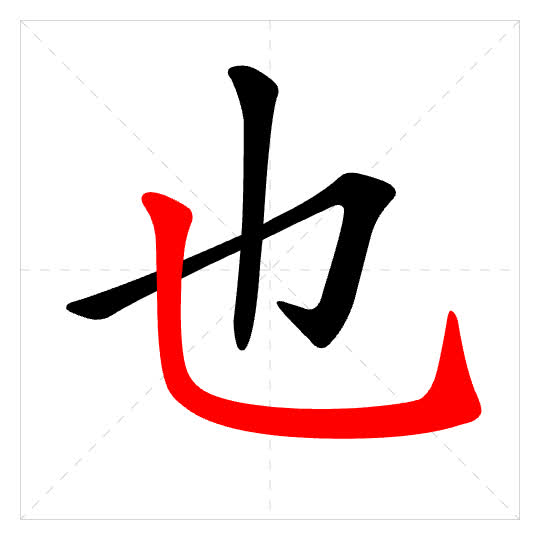
Basic Meaning
part
formal or classical usage
(literary) indicates a tone of judgment or explanation; indicates a tone of question or rhetorical question; indicates a pause in a sentence.
〈书〉1.表示判断或解释的语气。2.表示疑问或反诘的语气。3.表示句中的停顿。
Words:
非不能也是不为也何也
Sentences:
- 何也?Why is that?
- 非不能也,是不为也。It's not that I can't do it, but that I won't do it.
adv
used alone or repeated to emphasize parallelism or contrast between two things.
单用或重复使用,强调两事并列或对待。
Sentences:
- 他喜欢咖啡,也喜欢茶。He likes coffee, and he also likes tea.
- 她唱歌也好,跳舞也好。She is good at singing, and she is also good at dancing.
adv
indicates that a certain result will occur regardless of the situation.
表示无论这样或那样,都会出现某种结果。
Sentences:
- 不管下雨不下雨,我也会去。Whether it rains or not, I will still go.
- 你同意也好,不同意也好,我都要做。Whether you agree or not, I will do it.
adv
used for emphasis.
表示强调。
Sentences:
- 他跑得也太快了。He runs incredibly fast.
- 这个电影也太好看了!This movie is really amazing!
adv
indicates a mild or polite tone.
表示委婉语气。
Sentences:
- 我也许明天会来。I might come tomorrow.
- 这样也好,我们可以休息一下。That's fine too, we can take a break.
adv
used in conjunction with words like 'even if' or 'would rather' to indicate concession or contrast.
与“即使”“宁可”等呼应,表示让步或转折关系。
Sentences:
- 即使下雨,我也会去。Even if it rains, I will still go.
- 宁可饿着,我也不吃这个。I would rather go hungry than eat this.
adv
used in a single sentence to imply similarity to another situation.
用在单句中,表示暗含跟另一件事一样。
Sentences:
- 他学习很努力,我也一样。He studies very hard, and I do too.
- 这个水库可以灌溉、发电,也可以养鱼。This reservoir can be used for irrigation, power generation, and fish farming.
Writing & Component
Radical乙
Structuresingle
Stroke Count3
Strokes𠃌丨乚