
乎乎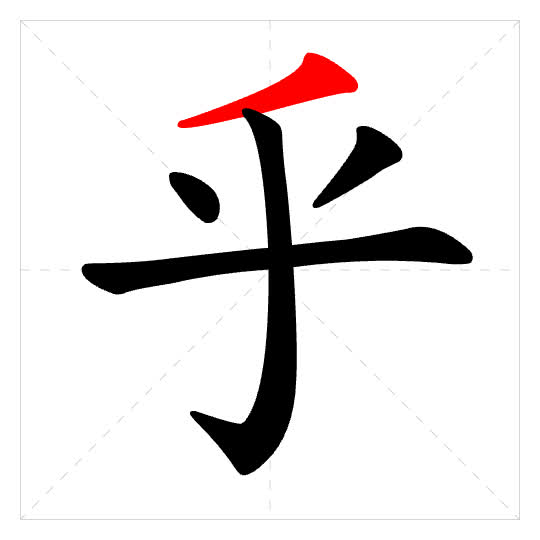
Basic Meaning
prep
formal/literary usage; often found in classical or written Chinese.
used after verbs to introduce time, place, object, reason, etc., similar to "于".
〈书〉用在动词后,引出时间、处所、对象、原因等,作用跟“于”相当。
Words:
关乎近乎在乎外乎合乎
Sentences:
- 这个问题关乎大家的利益。This issue concerns everyone's interests.
- 他的想法近乎完美。His idea is almost perfect.
- 成功在乎努力和坚持。Success lies in effort and persistence.
part
common in modern Chinese; often used in set phrases like 几乎.
used after adjectives or adverbs to indicate a pause or emphasis.
用在形容词或副词之后表示停顿或强调。
Words:
几乎确乎全乎迥乎热乎
Sentences:
- 这个任务几乎不可能完成。This task is almost impossible to complete.
- 他的回答确乎很有道理。His answer is indeed very reasonable.
part
formal/literary usage; typically used in classical contexts.
modal particle expressing exclamation, similar to "啊".
〈书〉语气助词。表示感叹,跟“啊”相当。
Words:
乎栽
Sentences:
- 嗟乎,时光飞逝!Alas, time flies!
- 呜乎,哀哉!Alas, how sad!
part
formal/literary usage; often appears in exclamatory phrases.
used to indicate a pause to soften tone or "call out and inform".
表示停顿以舒缓语气或“呼而告之”。
Words:
嗟乎呜乎在乎近乎确乎
part
formal/literary usage; similar to sense 7 but with a focus on exclamation.
expresses exclamation, equivalent to "啊".
表示感叹,相当于“啊”。
Words:
怪乎噫乎惜乎
Sentences:
- 怪乎,他竟然忘了这件事。How strange, he actually forgot this matter.
- 噫乎,人生如梦!Alas, life is like a dream!
Writing & Component
Radical丿
Structuresingle
Stroke Count5
Strokes丿丶丿一亅